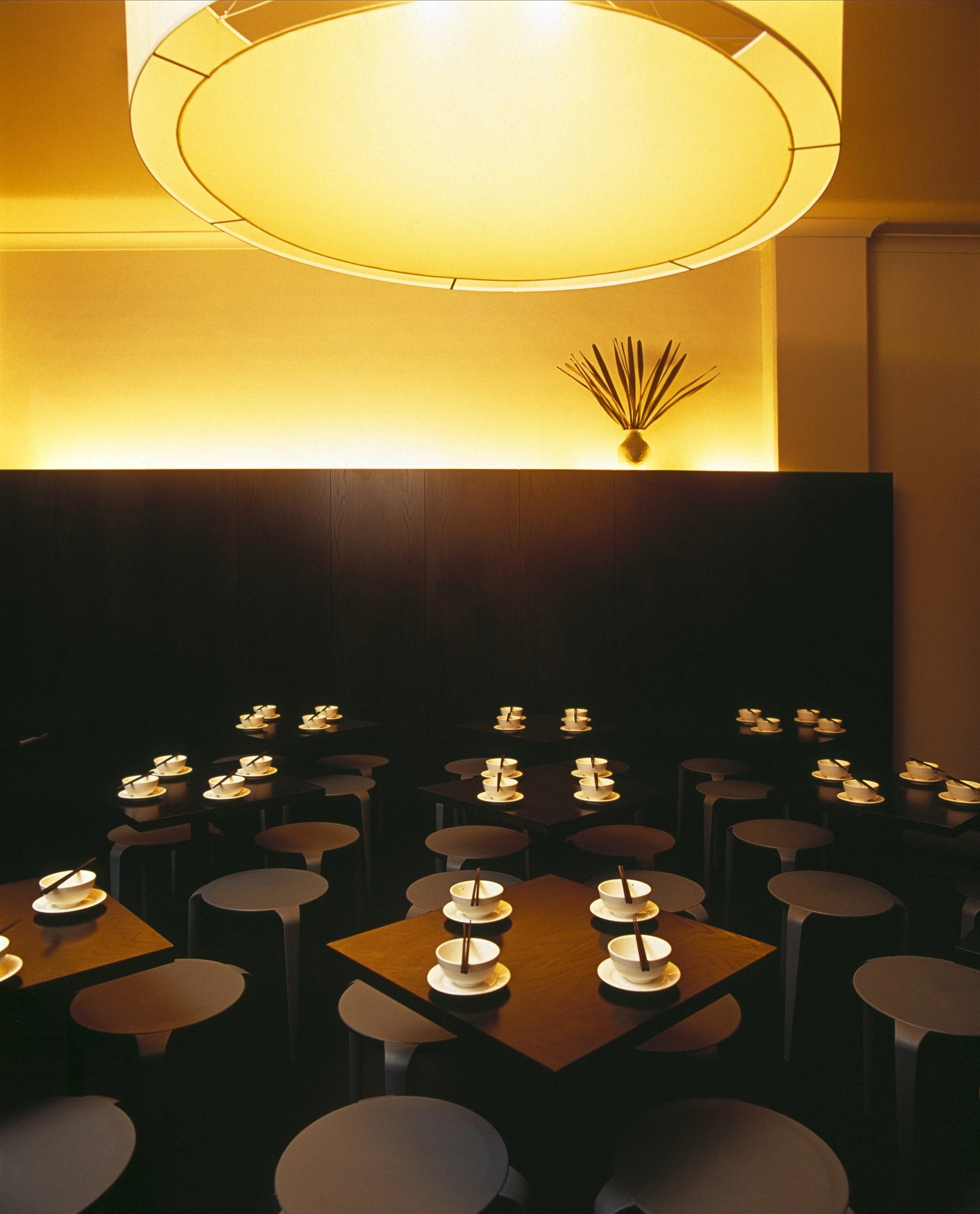
Designed for acclaimed chef Kylie Kwong, Billy Kwong was conceived as a humble eating house, where the interior quietly supported the rituals of gathering and dining. Rather than competing with the experience of food, the space embraced simplicity, creating an atmosphere that felt generous and unpretentious.

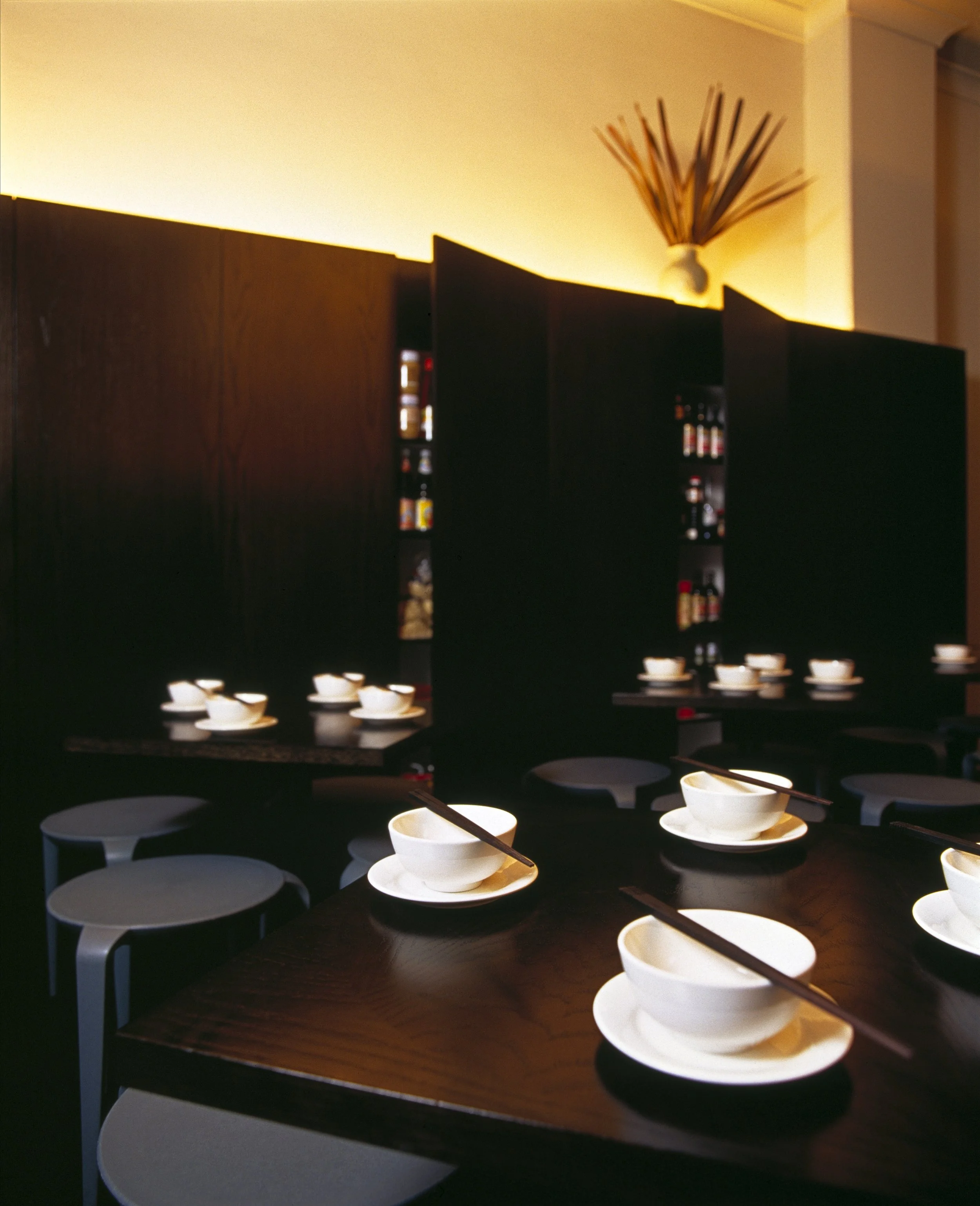
A restrained palette of dark-stained timber, soft amber light and simple furnishings established a calm backdrop for everyday dining. Suspended above the room, an oversized paper lantern cast a diffuse glow, becoming the quiet heart of the space. More than a light fitting, it gave the modest dining room a sense of generosity, bringing warmth and intimacy without ornament.

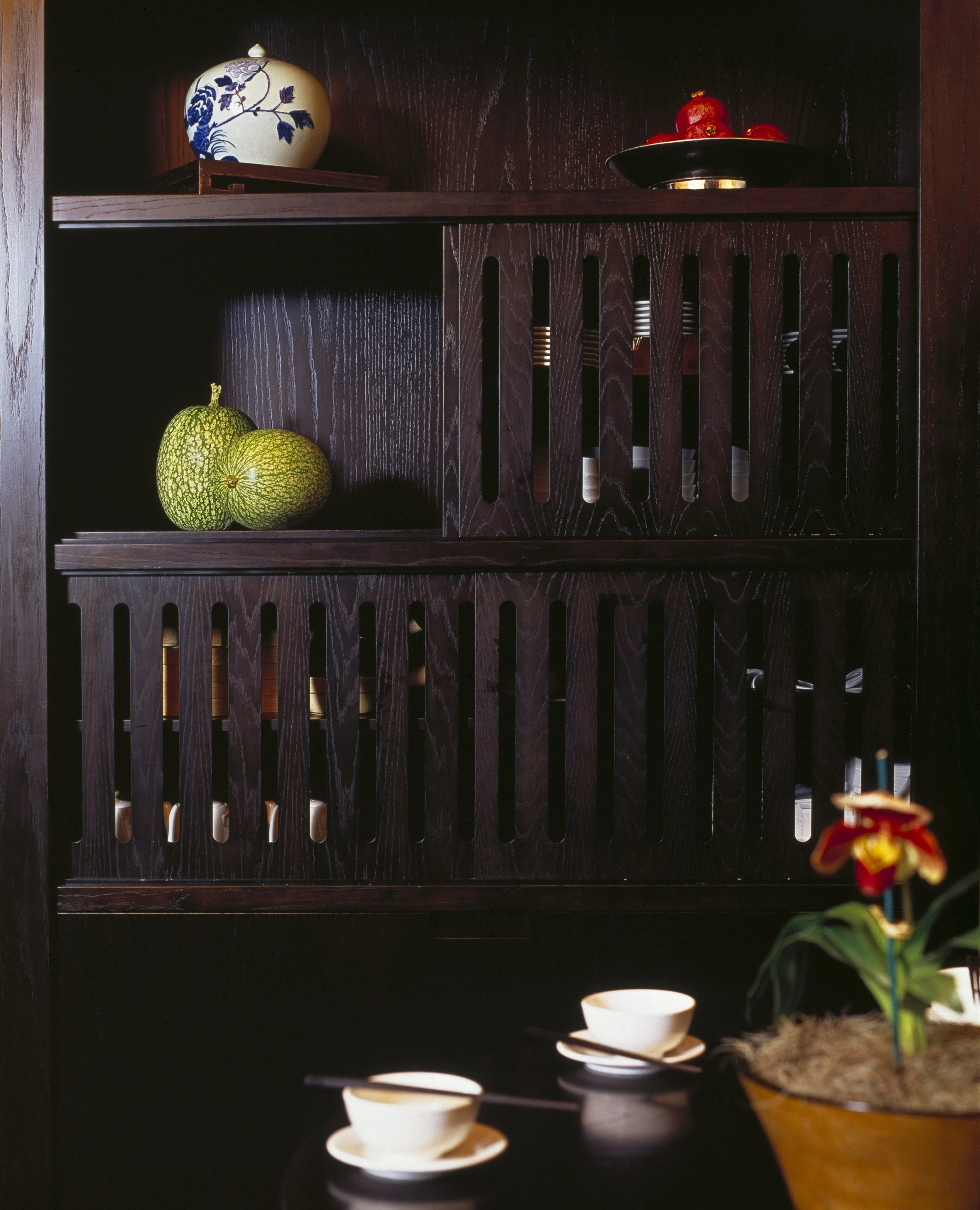
Continuous timber joinery wrapped the perimeter of the restaurant, concealing storage and the practical necessities of a working kitchen behind an uninterrupted surface. Free standing cupboards opened throughout service to reveal ingredients, ceramics and wine before closing again, allowing the room to return to a state of visual calm. Function remained present, but never dominated the experience.

Drawing from the quiet spatial sensibilities of traditional Chinese and Japanese architecture, the project found beauty in restraint rather than display. The interior receded, allowing the rhythms of service and shared meals to define the character of the space.

For Studio Chen Lu, Billy Kwong was an early exploration of a philosophy that continues to shape the studio's work today: the most meaningful interiors are those that create the conditions for everyday life to unfold. Through simplicity and thoughtful restraint, a modest neighbourhood restaurant became a place where food, hospitality and human connection naturally took centre stage.�