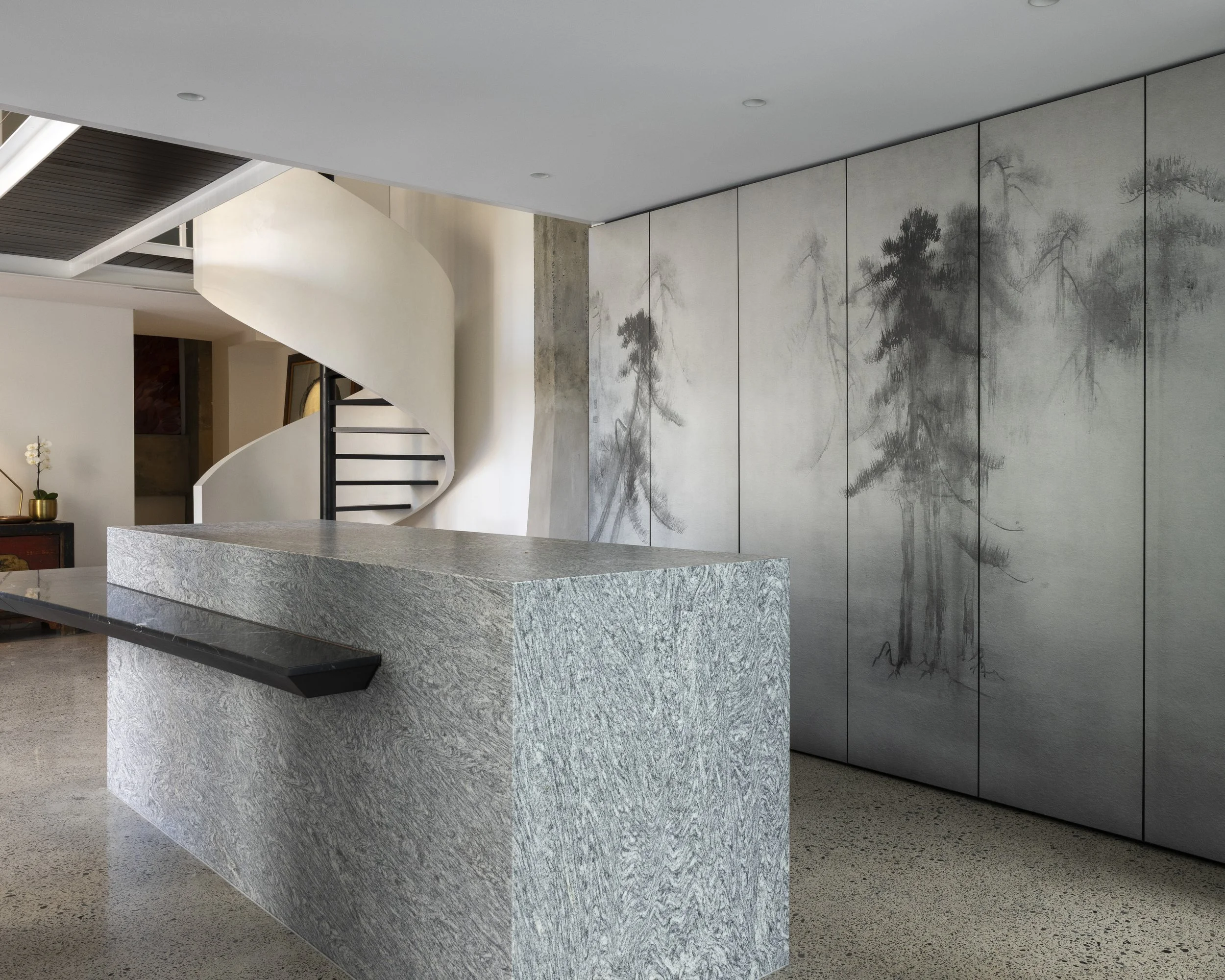
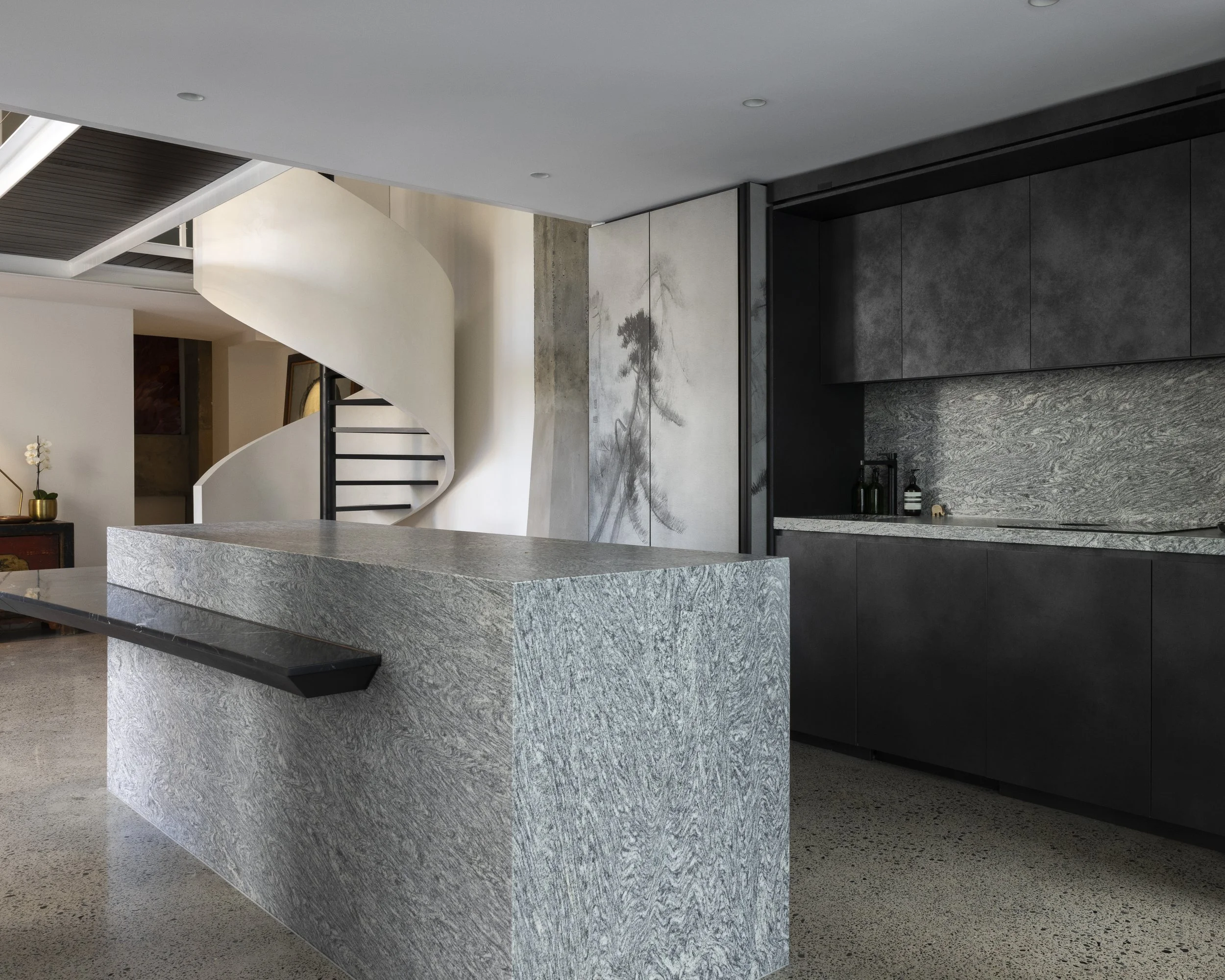
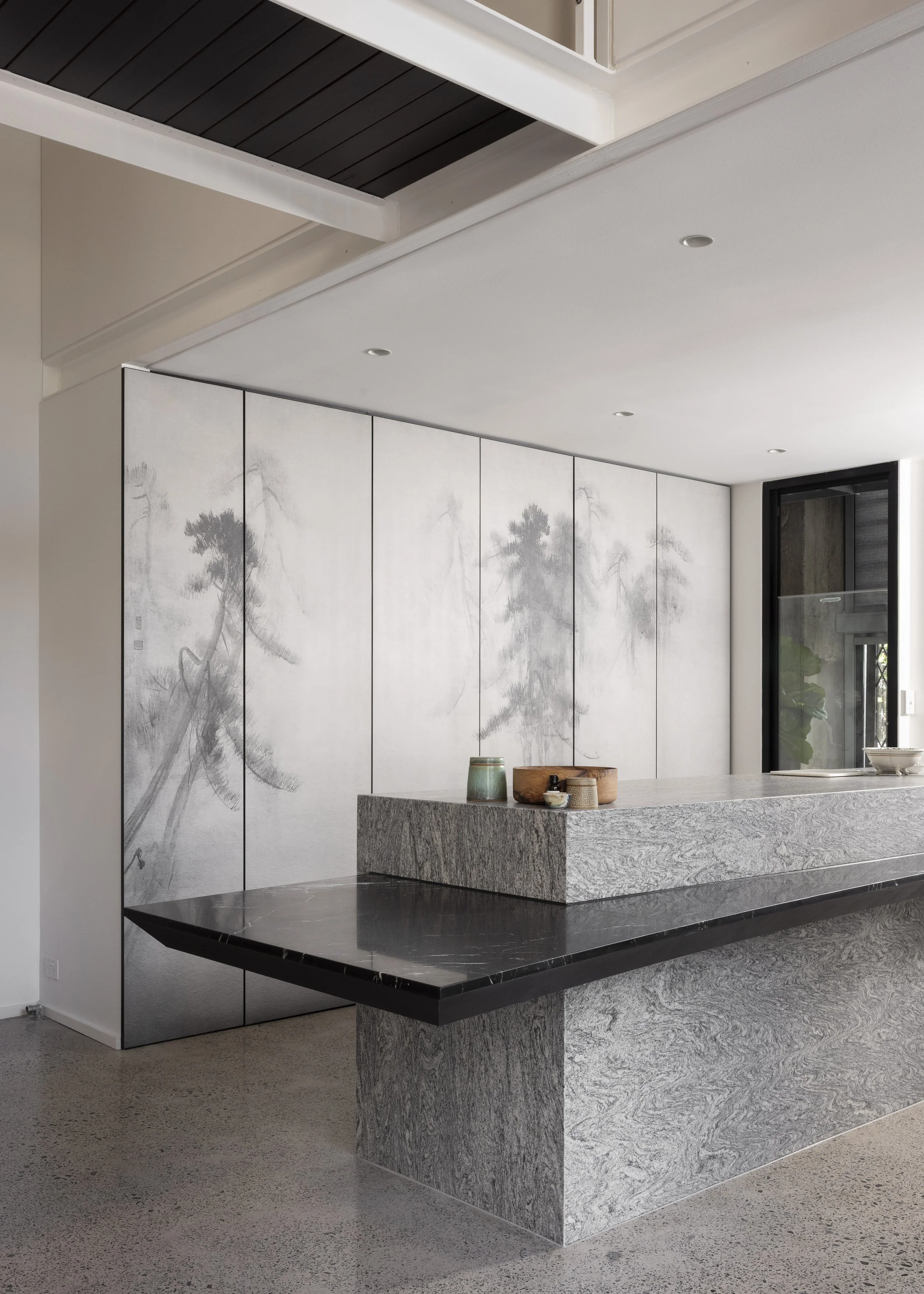
In this Surry Hills apartment, a large decorative screen inspired by Hasegawa Tōhaku's Pine Trees conceals a fully functioning kitchen behind its wallpapered surface. What first appears as a decorative mural gradually reveals itself as finely crafted joinery, pivoting open to expose grey stone, charcoal cabinetry and a monolithic island. Set against the lightness of the spiral stair and the atmospheric quality of the screen, the kitchen becomes a quiet counterpoint rather than a permanent visual presence.

Drawing on the Japanese notion of ma, the project explores the interval between things, where space is shaped as much by what is withheld as by what is revealed. The screen does not simply conceal function but choreographs it. Opening the kitchen, preparing a meal and closing it again becomes a daily ritual, allowing the interior to shift effortlessly between everyday living and contemplation.

Echoing the sensibility of wabi, the apartment finds beauty in restraint and material honesty. The living area remains open and gallery-like, while the kitchen exists as a latent presence, emerging only when needed.

Rather than treating the interior as a collection of objects and rooms, the project considers the experience of space itself. Through moments of concealment and revelation, the apartment unfolds gradually, allowing emptiness to become an active presence that brings clarity, calm and generosity to everyday life.